

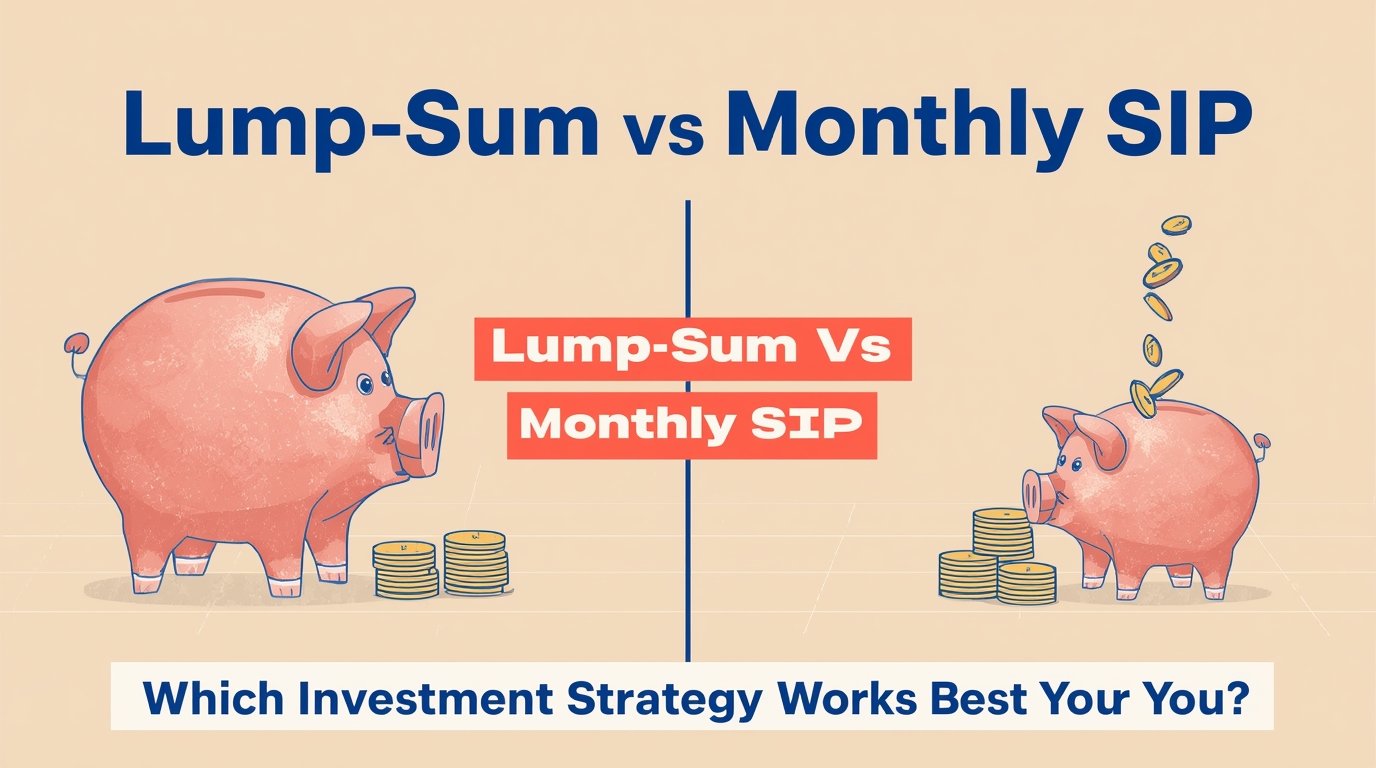
Lump-Sum vs Monthly SIP: Which Investment Strategy Is Right for You?
When it comes to investing, one of the most common questions investors ask is:
Should I invest all my money at once (lump-sum), or invest gradually through a monthly SIP?
This decision can significantly impact your long-term returns, risk exposure, and peace of mind. There is no one-size-fits-all answer — the right choice depends on your income, goals, risk tolerance, and market comfort.
This guide explains lump-sum vs SIP investing in a simple, practical, and unbiased way so you can choose confidently.
---What Is a Monthly SIP?
A Systematic Investment Plan (SIP) allows you to invest a fixed amount at regular intervals (usually monthly) into a mutual fund or investment scheme.
Instead of worrying about market timing, SIP focuses on consistency and discipline.
Why SIP Works for Most Investors
- Uses rupee cost averaging to reduce market timing risk
- Encourages long-term investing habits
- Easy to start with small monthly amounts
- Ideal for salaried and first-time investors
You can estimate realistic SIP returns using the Best SIP Calculator Online or analyze frequent investing patterns with the Daily SIP Calculator.
---What Is a Lump-Sum Investment?
A lump-sum investment means investing a large amount of money in one go. This strategy works best when you have surplus funds and a long investment horizon.
Your entire capital gets market exposure from day one, which can lead to higher returns if markets perform well.
Benefits of Lump-Sum Investing
- Maximum compounding potential over time
- Simple strategy with minimal monitoring
- Effective during market corrections
To understand possible outcomes, use the Lump-Sum SIP Calculator or factor in purchasing power loss with the Lump-Sum Calculator with Inflation.
---Lump-Sum vs Monthly SIP: Key Differences
| Criteria | Monthly SIP | Lump-Sum Investment |
|---|---|---|
| Market Timing Risk | Low (spread over time) | High (depends on entry point) |
| Volatility Impact | Smoothed through averaging | Fully exposed |
| Capital Requirement | Low to moderate | High upfront amount |
| Best Suited For | Beginners, salaried investors | Experienced investors with surplus funds |
How Inflation Changes the Real Returns
Returns that look attractive on paper may lose value when inflation is considered.
Whether you choose SIP or lump-sum, you should always analyze inflation-adjusted returns.
Use tools like the SIP Calculator with Inflation, Inflation Future Value Calculator, or Salary Inflation Calculator to understand real purchasing power.
---Should You Combine SIP and Lump-Sum?
Many smart investors use a hybrid approach:
- Lump-sum investments during market dips
- Monthly SIPs for regular income investing
This balances discipline and opportunity while reducing emotional decision-making.
You can plan your overall finances using tools like the Investment Planner Calculator and track progress using the Net Worth Calculator.
---Related Tools for Smarter Financial Decisions
- Mutual Fund Calculator
- CAGR Calculator
- Retirement Calculator
- Fixed Deposit Calculator
- Gold Investment Calculator
- Emergency Fund Calculator
Final Verdict
SIP is ideal for most investors because it removes timing stress and builds discipline.
Lump-sum investing can outperform when done patiently, with surplus funds and a long-term view.
The smartest strategy is the one you can follow consistently — not the one that looks best on paper.
Tools don’t replace judgment, but they help you make better decisions.


Comments are closed.